
Winter Warmer

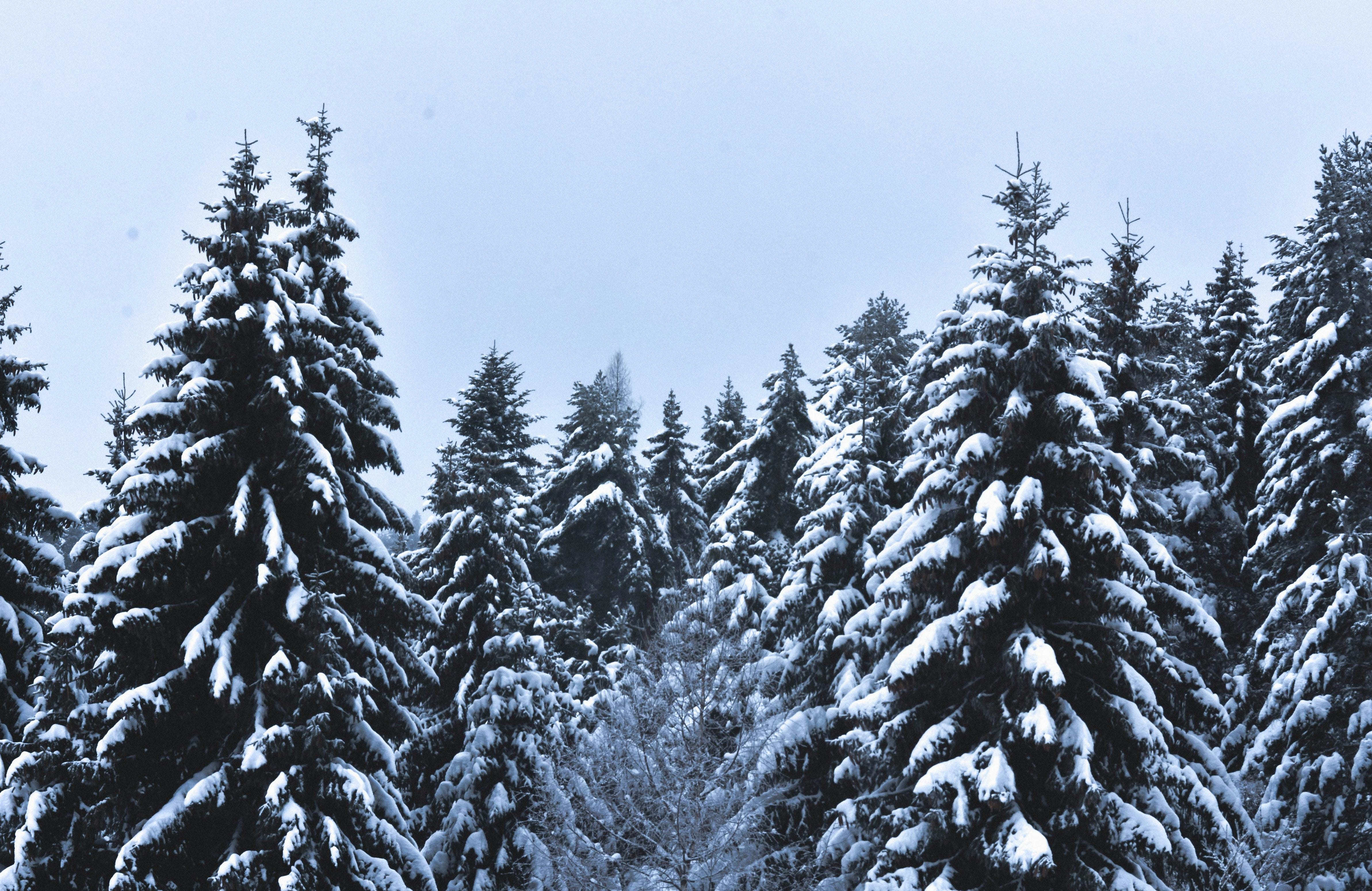
Stepping out of the howling wind and snow and into the doorway of the nearby pub, the unaccompanied man first removed his knitted hat and gloves and then unbuttoned his wool parka to reacclimate to the warmer indoor temperature before approaching the long, oaken bar and occupying a stool slightly to the left of center.
Around the pub hung evergreen boughs and garlands of fir, pine, and yew draped over doorframes and along the bar itself, and at random intervals, holly and ivy dangled wild and asymmetrical, tied with leather strips and lengths of twine, sometimes intermingled with sprigs of bright rowan. On the opposite wall of the bar, a fire blazed in the large open hearth, its contents consisting of a single log roughly the size of an intact tree trunk. Upon closer examination, there were ornate symbols carved into the log, but the man was unable to discern their meaning. Along the hearth were apples, crusts of hard bread, and cups of ale near an empty stool unoccupied by any of the pub’s denizens.
Above the din of fiddles, pipes, and hand drums emitting from the pub’s overhead speakers, the man leaned toward the barman and asked, “Yeah, can I get some kind of Christmas ale or…?”
“Nothing of that sort here at The Woad & Antler,” the barman replied, “but we have just tapped a few firkins of our local seasonal brew.
“Uhh…sure. That sounds great,” the man said.
At that, the barman retrieved a dimpled glass mug from under the bar and held it at a slight angle under the silver tap of a small wooden barrel resting atop the bar. The glass filled with a reddish auburn liquid capped with a full inch of off-white foam. “An imperial pint of Mari Lwyd,” he announced, placing the mug before the man.
“Mari Lwyd?” the man asked.
“Yes,” the barman replied. “The Grey Mare. Perhaps she’ll even make an appearance tonight for the solstice.”
The man took a sip of the ale, nodded approvingly, and then drank a fuller gulp. He tasted hints of cinnamon, cloves, ginger, and nutmeg with a strong alcoholic finish and a lingering aftertaste of something like anise or licorice. Wormwood? he thought to himself, being reminded of absinthe or even vermouth. The ale warmed and soothed him, and before long, he had emptied his glass and ordered a second.
“So, listen,” the man said to the barman’s back, “I love the decor in here. Rustic and earthy. Very homey. But I can’t help noticing there’s nothing about Christmas here. No nativities or baby Jesuses or jolly old St. Nicks.”
An old woman sitting to his left with stringy silver hair and piercing grey-blue eyes turned to face him. “We don’t mark Christmas here,” she said. “We don’t keep with the rituals of an invader religion from the Middle East. We observe the traditional ways of the European here. Of the Welsh and German, the Norse and Celtic and the Icelandic.”
“Oh, okay,” the man said. “I mean, my dad was German, but I…uhh. We’re in Pennsylvania.” He wanted to ask if this was some kind of race thing but thought the better of it.
The woman looked at him. “This is not Christmas. This is Yule, and today is the Solstice: the season’s end, the final night on which the darkness prevails over the day.”
“Well, I guess Happy Yule then,” the man said, raising his mug.
“God Jul,” the woman replied before turning back to face the bar.
At that, there was the sudden sound of sleighbells as the door to The Woad & Antler opened and a group of five people entered, dressed in dark wool cloaks and carrying lowered lanters. Among them loomed a tall figure covered in a flowing white sheet, fully obscured but for a protruding horse skull. The skull was festooned with a crown of holly and wild flowers, its eye sockets occupied by opalescent green glass, resembling bottles of pilsner. At their approach, the bar fell silent, and the music came to an abrupt halt.
“Trick or treaters?” the man asked the barman, now turned to greet the visitors. “Who’s got the candy?”
“The Mari Lwyd has come wassailing,” the barman replied.
The man chuckled and raised his glass. “Well, cheers then,” he said, ”I’m enjoying your beer here, Ms. Lwyd. Care to sign an autograph?”
The group, led presumably by the Mari Lwyd, she of the ominous horse skull, turned and approached the man. As he sat nervously upright in his seat, he found himself now face-to-face with the skull. The skull’s lower jaw opened as though on a rudimentary hinge, and a voice from somewhere inside the sheet produced the word, “Pwnco.”
“Uhh…” the man said. “Sprechen sie Englisch?”
“Pwnco,” repeated the woman at the bar. “It’s a battle of wits. Of verse. The Mari Lwyd is challenging you. If you best her, she will leave here and venture forth to the next residence to test another.”
The man laughed, “Oh, like a poetry slam? I’ve got this.” Looking around the room, he asked, jokingly, “Hey, anybody know a good rhyme for Nantucket?”
The occupants of The Woad & Antler sat in reverent silence. The man stopped laughing and turned again to face the skull in amusement and anticipation. After a moment or two, the Mari Lywd’s jaw unhinged again.
Two days before all thanks were said,
She closed the door, your table dead.
No bread was broke, no hand held fast—
The warmth you knew slipped to the past.You fled from roads that knew your name,
Took turns at random, coin-flip game.
A week you dwell now this town in,
A borrowed hearth, a rented skin.You sleep where strangers rest and go,
With grief for company, quiet, slow.
Alone you drink, alone you stay,
Counting the hours, draining days.Yet hear me now, who walks the cold:
What’s lost is not the fate you hold.
The year breaks here—and thus the pain.
The sun will turn. You shall remain.
The man rose suddenly from his barstool, wide-eyed and ashen. “What the… Nan… tuck?!” he said, yet all levity had vanished from his affect.
“Your turn,” whispered the woman next to him in sympathy. The barman looked away while the pub’s other patrons bowed their heads uncomfortably, now fully invested in the pints before them. The Mari Lwyd and her retinue stood in silence, awaiting the man’s response.
The man slapped down a few bills on the bar, donning his coat, hat, and gloves, and quickly exited from the pub into the snowy night outside. His second beer lingered on the bar, only partially finished. And among the crumpled cash, there lay a single folded piece of notebook paper he had unwittingly left behind upon his flight.
He weighed returning to his rented room up the street, but this anonymous setting now felt public and exposed, as transparent as his heartbreak now laid bare by the Mari Lwyd’s verse. The denouement he had written for himself in just four days seemed cheapened and pathetic. He considered getting into his car and driving the few hours back to his hometown in Northeast Ohio to lick his wounds and find solace in friends and family, but his pride was too great to allow him ever to be pitied. Being wished well, the concern of others would debase him.
Instead, the man wandered without purpose into a nearby park, abandoning the plowed roads and trudging through the heavy snow toward a treeline at the far edge of the grounds. In the pale moonlight, fog of his hot breath rose like steam in the cold night air. Entering the woods through a thicket of evergreens, the man gave no real thought to his destination. He only wanted to be alone, to be unseen by his fellow man. He wished to have every connection severed, to live completely apart. Or maybe he just thought this place would be as good as anywhere else.
Ahead, he heard the sound of muted drumming and saw the faint glow of firelight in a clearing beyond the trees. Despite his current state, he found himself drawn involuntarily toward the source. At the clearing, he hunched in a snowbank, grasping the trunk of a birch tree marked with unfamiliar symbols, and beheld, just ahead, a gathering of figures around a low bonfire burning steadily in the center of the woods. Among the flames lay heavy logs, carefully situated end to end. Those around the fire swayed in unison, some holding cradle drums and lanterns, their faces obscured by heavy hoods. The air was redolent with pine sap, smoke, and damp earth.
The man wondered if the revelers waited for the Mari Lwyd or for something else entirely, a different old god or spectre from a distant past. He watched the figures sway in communion around the fire, united in ritual and commemorating not the end itself, not oblivion, but the terminus of one cycle and the genesis of another. The days shortened to a point, and then they lengthened again. The leaves fell away from the branches and died, the fruits of the vine were harvested or, instead, rotted in the open air, but then everything reemerged anew.
The sun will turn, you shall remain.
The man reached into his coat pocket for the paper he had been carrying. He thought he would walk forward into the clearing and past the figures and deposit that terrible missive into the flames, but as his hands searched the pocket’s interior, they came up empty. The man laughed, knowing immediately what had happened, yet he came forth anyway. No one acknowledged his presence as he approached the fire. With empty hands, the man cast the null contents into the flames and watched them become consumed. From the corner of his eye, he saw one of the participants slowly turn in his direction and offer a brief smile and nod.
When the man returned to The Woad & Antler, it was as he had found it earlier in the day. The music was lively, the conversations were full of merriment, and the fire burned brightly in the hearth. The man reached the bar and occupied the same stool just left of center. His money was still on the bar, and his second pint of Mari Lwyd still held a quarter of its contents. The man lifted the glass to his mouth and emptied it before sighing approvingly.
“Another one, friend?” said the barman, now turned to face him with a warm smile.
“Yes, please,” said the man. “Hey, uhhh, did I leave a sheet of paper on the bar when I…uhhh…was called away earlier?”
On the stool next to him, the same old woman from before motioned with her head toward the fire in the hearth. Her pale blue eyes glistened in the firelight, and the strings of silver hair framed her open face like tinsel.
The man smiled and nodded. “God Jul,” he said.
“God Jul,” repeated the woman, laying her slender hand across his forearm.
Written December 2025
Jason. Your solstice story moves through darkness with flaming bursts of splendid wonder. I need to sit this through a few times, to take in the whole. I’m immediately drawn to the depth of detail and mystic meanings. Thank you for sharing, my friend!